Drug Drive Aware

Drug driving awareness training for UK workplaces.

Your driver can be sober, safe and legal to work on Monday, and still be convicted for Saturday night. We make sure no driver can say “I didn’t know”.

A half-day course on your site, anywhere in the UK, and a 15-minute pack your own managers run on every shift.

Chapter one

This is not a niche offence.

Every figure below comes from DVLA records. Nothing on this site is estimated.

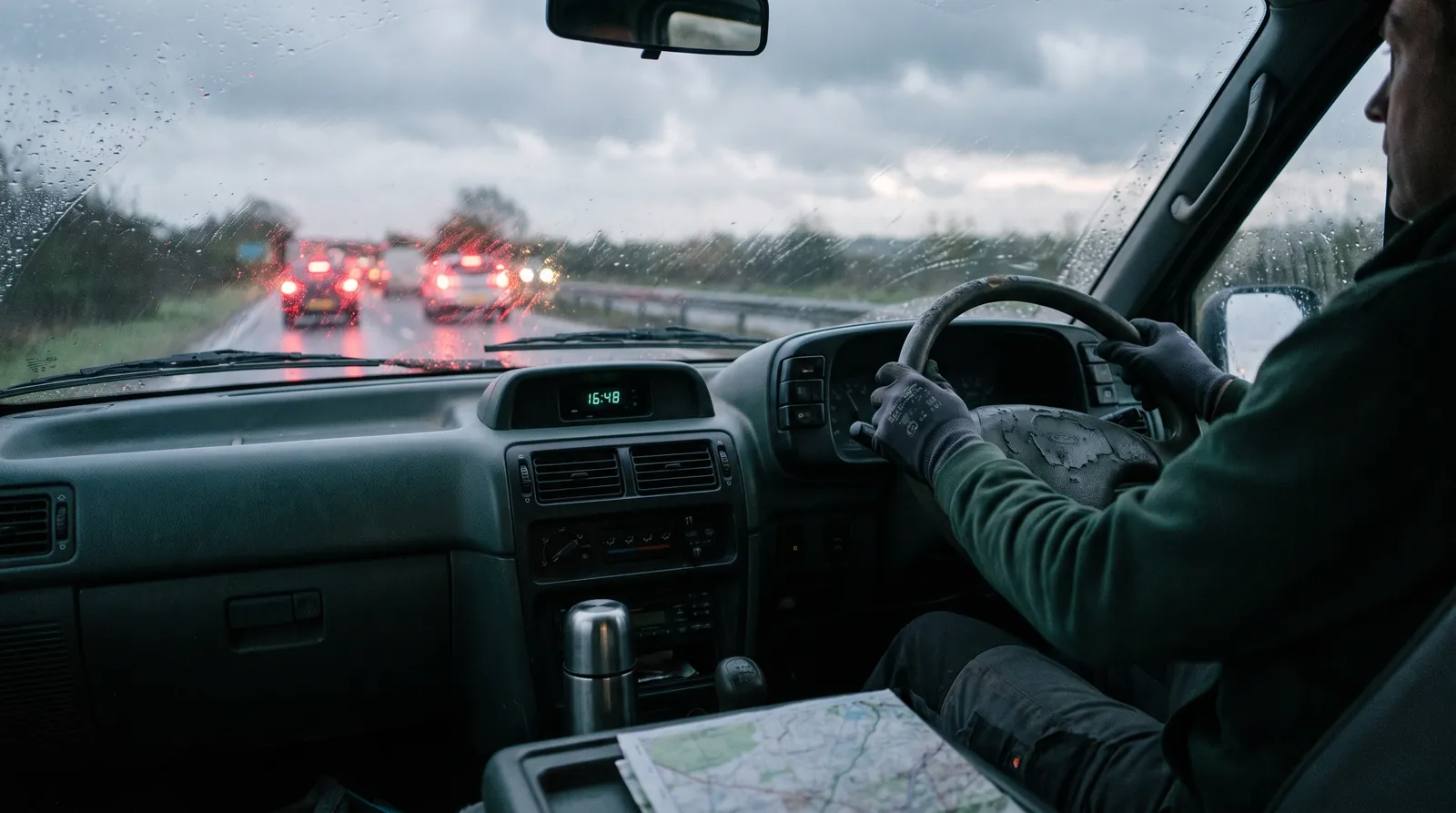
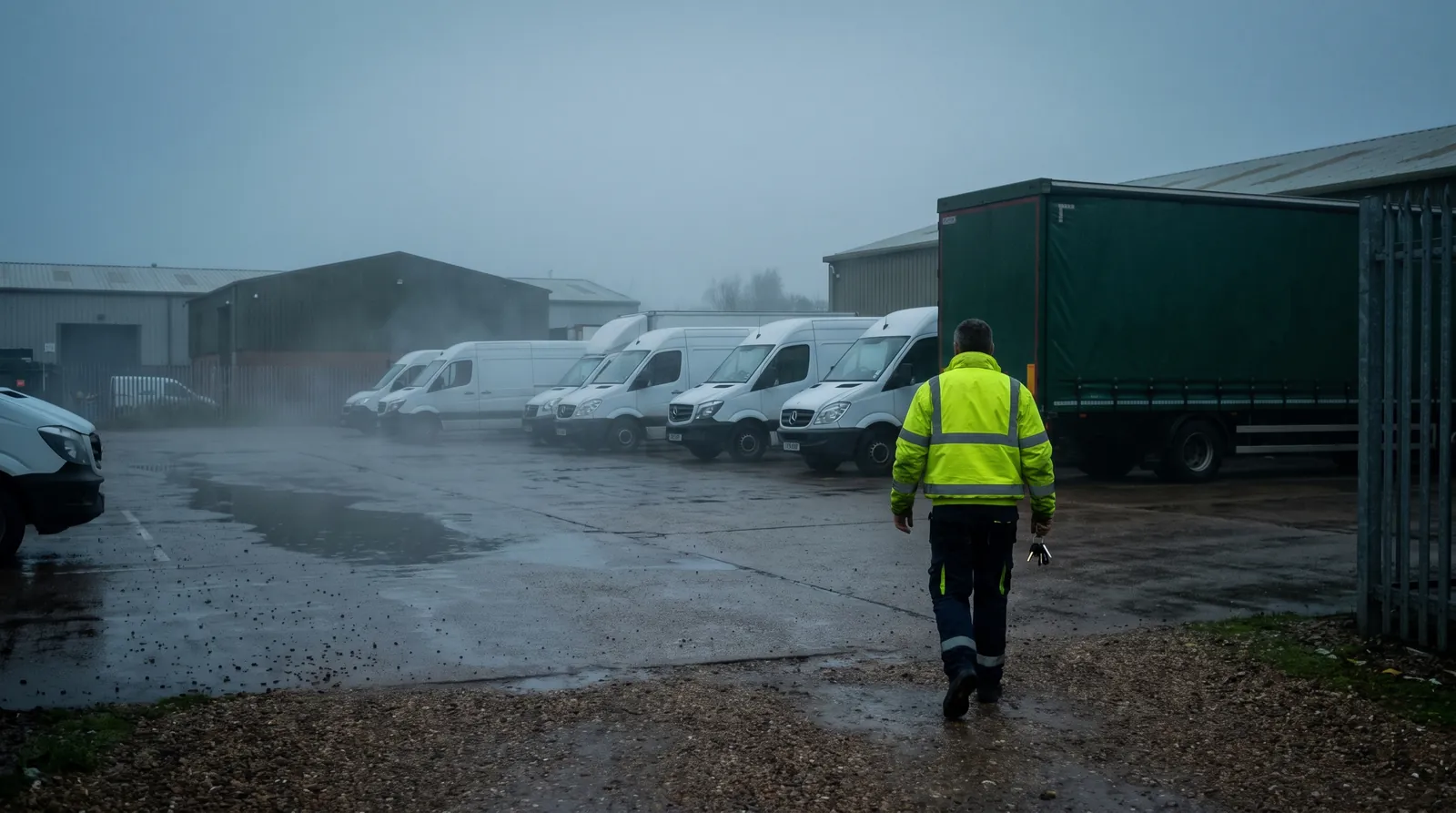
A depot yard at first light, a row of white vans on wet tarmac and one driver walking towards them with keys in hand.
Monday morning. Sober, safe, legal to work. The law is not asking about any of that.

0

Drug driving endorsements added to UK licences in 2025

1every 17 min

The 2025 rate, round the clock, all year

0

Drivers holding at least one DG10 endorsement

0years

How long it stays on a licence

2025 was the first year drug driving endorsements overtook drink driving (30,707 against 29,769). Source: DVLA data analysed by IAM RoadSmart, 9 July 2026; RAC analysis of DVLA data, Freedom of Information request FOIR12833, published 19 May 2026. The rate is arithmetic on the 2025 figure.

Chapter two. What we teach, part one

It never asks how you feel.

This is the part almost nobody has been told, and it is the reason people are convicted while stone-cold sober.

Since March 2015, Section 5A of the Road Traffic Act makes it an offence to drive with any of 17 specified drugs above a set limit in your blood.

It is a limit offence, not an impairment offence. The law does not ask whether you were a danger. It asks what was in the blood sample. Feeling completely fine is not a defence, and neither is driving perfectly.

For illegal drugs the limits are set close to zero on purpose. This is a zero-tolerance law, and Parliament wrote it that way deliberately.

What is BZE?

One of the 17 listed substances is benzoylecgonine (BZE): not cocaine itself, but what your body turns cocaine into. It stays in the blood long after any effect has gone. That is how you can be convicted stone-cold sober. The conviction is still recorded, and reported, as drug driving.

Almost nobody has heard of it. That includes most of the people convicted because of it.
What a conviction costs

  1. Minimum 12-month driving ban
  2. An unlimited fine
  3. Up to 6 months in prison
  4. A criminal record
  5. A DG10 endorsement on the licence for 11 years
  6. Insurance premiums that can multiply
  7. And a search result that outlives all of it
Read the full guide

The official position on levels

The Sentencing Council’s guideline for this offence states plainly that it is not possible to draw a direct connection between the levels of a substance detected and the level of harm, and that limits for illegal drugs are set in line with a zero tolerance approach but ruling out accidental exposure.

Sentencing Council, Driving or attempting to drive with a specified drug above the specified limit, effective 1 July 2023.

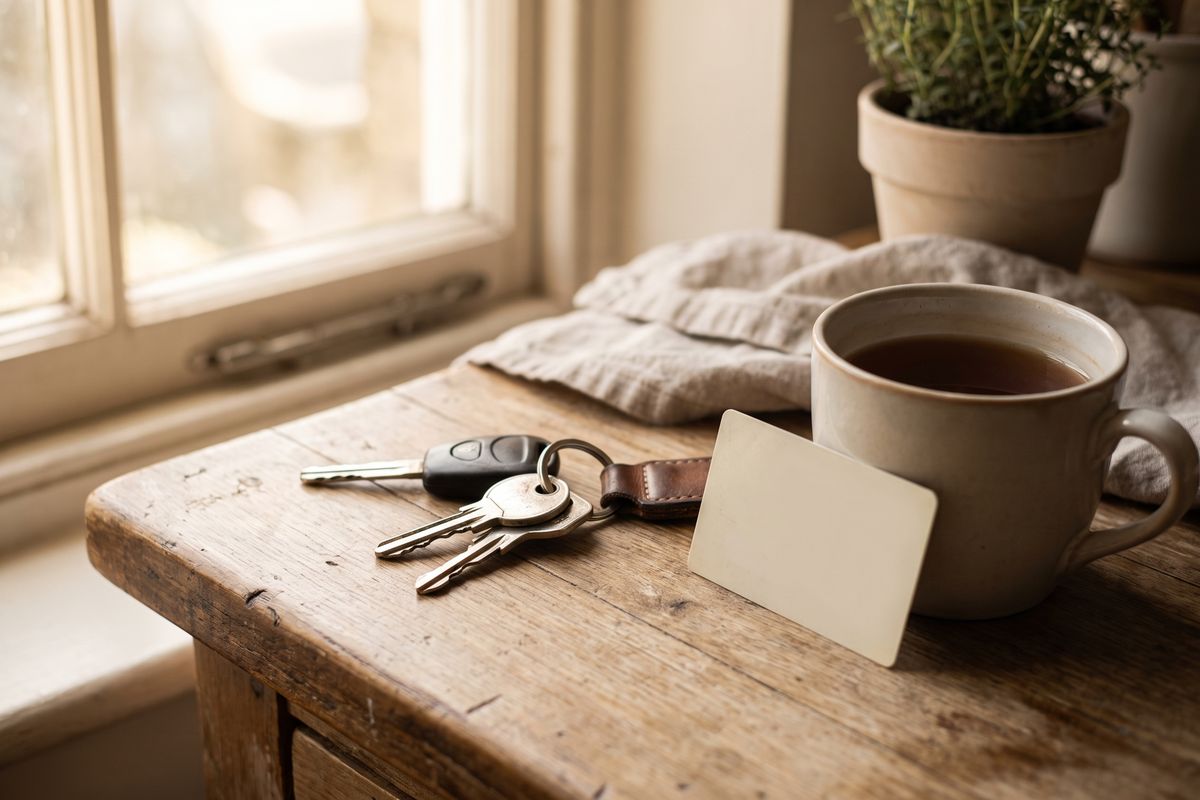
Car keys and a driving licence on a kitchen worktop beside a mug of tea.
The licence in that photograph is the thing the blood result decides.
Chapter three. What we teach, part two

The swab is the accusation. The blood is the verdict.

The single most practically useful thing in the talk. It is what a driver needs in the worst ten minutes of his year.

Most people assume the roadside swab is the thing that convicts them. It isn’t, and knowing the difference is the most practically useful thing a driver can carry. It is also the difference between a very bad afternoon and losing the licence in that photograph.

At the roadside

The swab screens

It flags, and it convicts nobody. It is not the evidence of the offence. What it does is give an officer grounds to arrest.

At the station

The blood decides

A blood sample is taken by a healthcare professional and sent to a laboratory. Only the blood decides. Everything that follows, charge or no charge, comes from that result.

It works in both directions

A swab can flag and the blood come back clean. It happened to the founder of this site: pulled over for a broken wing mirror, swab flagged, blood completely clear, no charge. The safeguard is real.

If you are ever tested: comply calmly, say little, and remember the blood sample is the evidence that matters. Refusing to provide a specimen is a separate offence in its own right, with obligatory disqualification of at least 12 months.

“So how long do I have to wait?”It comes up in every single session, usually within the first five minutes of the questions. The answer is the same every time, and it is not a number.

Chapter five. What we teach, part three

You’re reading the wrong clock.

Clock 1How you feel
Stops. You feel it stop.

You can feel this one. It stops, and you know it has stopped.

Clock 2What a blood test finds

Keeps running after clock 1 stops. No end is marked, because nobody can honestly mark one.

Almost everyone decides “am I okay to drive?” using Clock 1. The law only ever reads Clock 2.

Nobody, including the police, including this site, including anyone who offers you a number, can tell you exactly when Clock 2 stops for your body.

That’s not a gap in this website. That’s the actual scientific position, and anyone who gives you a number is guessing with your licence.

Chapter six. The honest answer

The limit isn’t set at “too impaired to drive”. It’s set barely above zero. You are not waiting to be safe, you are waiting to be undetectable, and nobody can tell you when that is.

If you drive for a living: the two things don’t go together at all. You’re not gambling a fine. You’re gambling your wage.

Why there’s no BZE calculator

People search for a BZE drug test calculator, a benzoylecgonine driving limit calculator, a drug driving calculator. Here is why one doesn’t exist, and why we will never build one.

A calculator would have to predict what an evidential blood sample will contain at a future moment, for one specific body. Not an average body. Yours. That prediction cannot be made reliably, and a calculator that pretends otherwise is not a tool. It is a confident-looking guess with your licence attached to it.

And notice what such a tool would be for. Not deciding whether you are safe, because the limit is not set at the point of danger. It would be for estimating when you would stop being detectable. Building it would make us the exact problem we exist to warn people about.

Try this before you trust any number you find

Open the first four results for your search and compare them. You will find different figures, different ranges, and different confidence levels, often on pages selling something.

They cannot all be right. There is no way for you to tell which one is, if any. And the one you are most likely to believe is the one that gives you the answer you want.

That contradiction is the finding. It is not that the internet hasn’t got round to answering this properly. It is that the question does not have the kind of answer people want it to have.

Chapter seven. What we teach, part four

So what do you do with “nobody knows”?

You stop trying to time it, because timing it is the thing that cannot be done. The rule that works is about separation, not hours.

Two colleagues in hi-vis talking over mugs of tea in a depot canteen.
Thirty seconds in a canteen is where most of this knowledge actually travels.

If you use, you don’t drive on your own judgement of feeling fine.

Because your judgement reads Clock 1 and the law reads Clock 2. You cannot make this decision in the moment with the keys in your hand, because in that moment the only information you have is the wrong information.

Decide in advance

Not on the day. If there’s any chance, the car doesn’t come, and that is settled before the weekend, not with the keys in your hand.

Your licence is your wage

Not a document. The thing that pays the mortgage, and the most valuable item you own that somebody else can take off you.

Tell five people

Thirty seconds in a cab or a canteen. Ignorance is the actual problem here, and the people who now know are the fix.

Chapter eight

Three ways to make sure your people know.

Built around how the law actually works, and around a shift pattern rather than a classroom. The workplace course is the one we deliver. The pack is the one your managers run.

A small workplace team seated around a table in a training session.
The workplace course

Workplace Course

Half day, on-site, anywhere in the UK. One cohort, delivered by our trainer.
One price per course. No cap on numbers.

  • Drivers and the managers responsible for them, in one room
  • Seven modules from the founder’s case to the decision rule
  • Wallet cards, manager one-pager, attendance record, certificate of attendance
  • We travel to you. Expenses charged at cost.
The pack

Depot Toolbox Talk Pack

The 15-minute version your managers run on every shift.

  • Manager delivery script and six slides
  • Wallet cards for every driver
  • Manager one-pager and attendance record for the file

Annual licence, per depot or per company.

Get the pack
Coming soon

Individual course

For individuals facing a charge, or who want the full knowledge. Coming soon.

  • Self-paced and private
  • The law, the process and the decision rules
  • Nothing recorded about you
Read more
Chapter nine

Three steps, and we do the travelling.

  1. Book a date

    Tell us where you are and when your drivers and managers are on site. One enquiry is enough.

  2. We deliver the half-day course on your site

    One cohort, one session, delivered by our trainer. Anywhere in the UK, expenses charged at cost.

  3. Every attendee leaves carded, attendance record on file

    Then licence the Pack for the shifts and sites we didn’t reach, so your own managers keep it running.

Built to be run by a depot manager, not a trainer

  • 01Delivered on shift. Fifteen minutes at the start of a shift, in the room your drivers are already standing in. No classroom, no day out.
  • 02No training background needed. The script says what to say and the slides say it again. A manager reads it; the pack carries the content.
  • 03The same talk, every site, every time. One script and one set of slides across every depot, so what a driver hears in one yard is what a driver hears in the next.
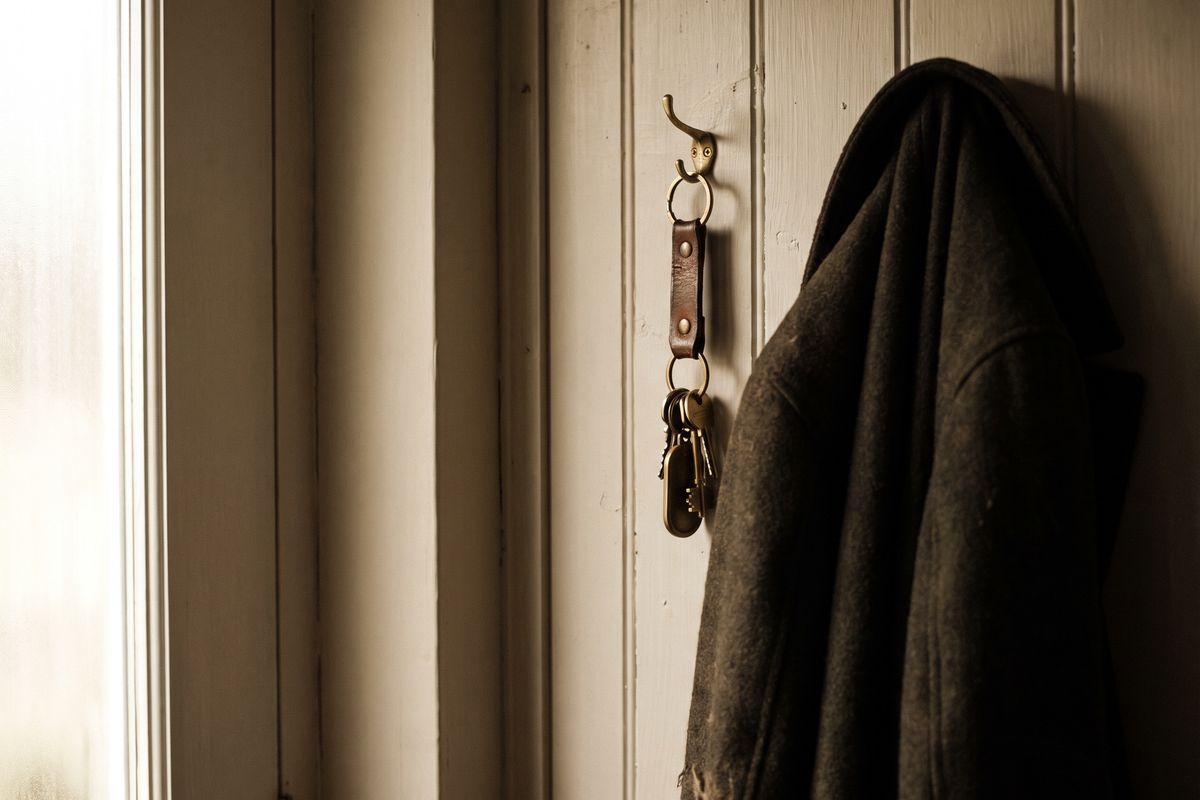
A set of van keys hanging on a hook beside a front door.
He passed the breathalyser. The conviction was for a substance he had never heard of.
Chapter ten

It was founded by someone this happened to.

He called the police on himself after a minor collision, passed the breathalyser, and was convicted for a substance he had never heard of.

Four years on, he still hasn’t met a member of the public who knows what he was actually convicted for. We exist so that no driver finds out the way he did: in a police station, from a law nobody had ever explained to them.

Fifteen minutes now, or a driver and a recruitment round later.

Book the workplace course: half a day, on your site, anywhere in the UK, and every attendee leaves knowing what BZE is. For the shifts we don’t reach, your managers run the pack.

Clock 2 is still running at the bottom of your screen. It has been since you scrolled past it. That is the whole point of this site.